
Restaurant Server Performance Evaluation
Restaurant server performance evaluation is often based on incomplete information.
Sales numbers, guest feedback, and manager impressions only show part of the picture.
They don’t reveal how consistently tables were visited, how long guests waited between check-ins, or where service gaps actually occurred during the shift.
That’s where the challenge lies — not in effort, but in what’s being measured.
To evaluate performance properly, you need to understand how service was actually delivered from start to finish — not just the outcome, but the behavior behind it.
Table Touch makes that measurable after the shift, giving you a clear and objective way to evaluate server performance based on what actually happened on the floor.
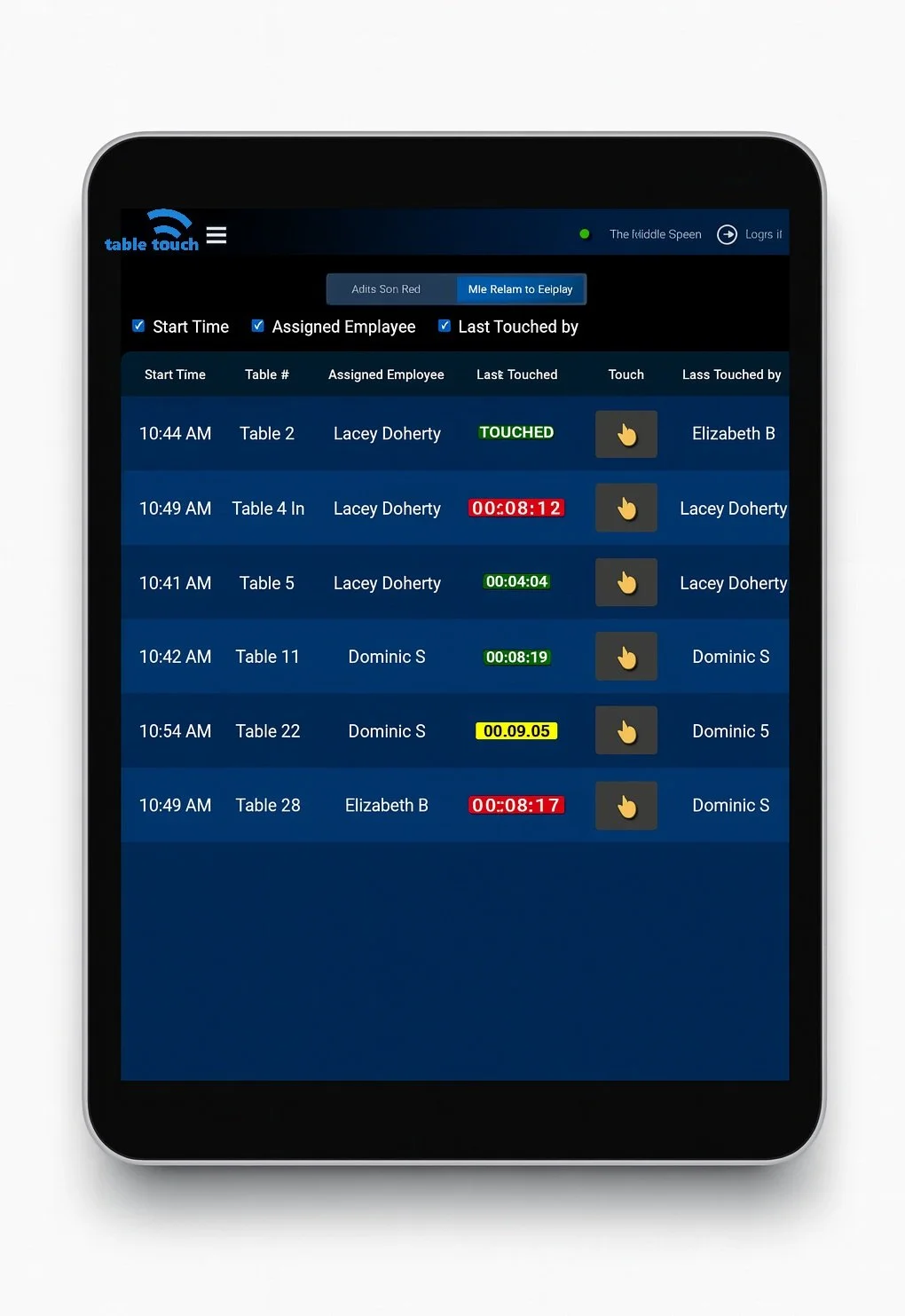
What Most Server Evaluations Miss
Most server evaluations focus on results:
Total sales
Tips earned
Guest feedback
General manager impressions
But these are outcomes — not the full story of service.
Two servers can generate similar sales while delivering very different guest experiences.
One may be consistently present, checking in at the right moments.
Another may leave longer gaps between visits, with issues going unnoticed.
Without visibility into service behavior, evaluations become subjective.
How Table Touch Captures Service Data
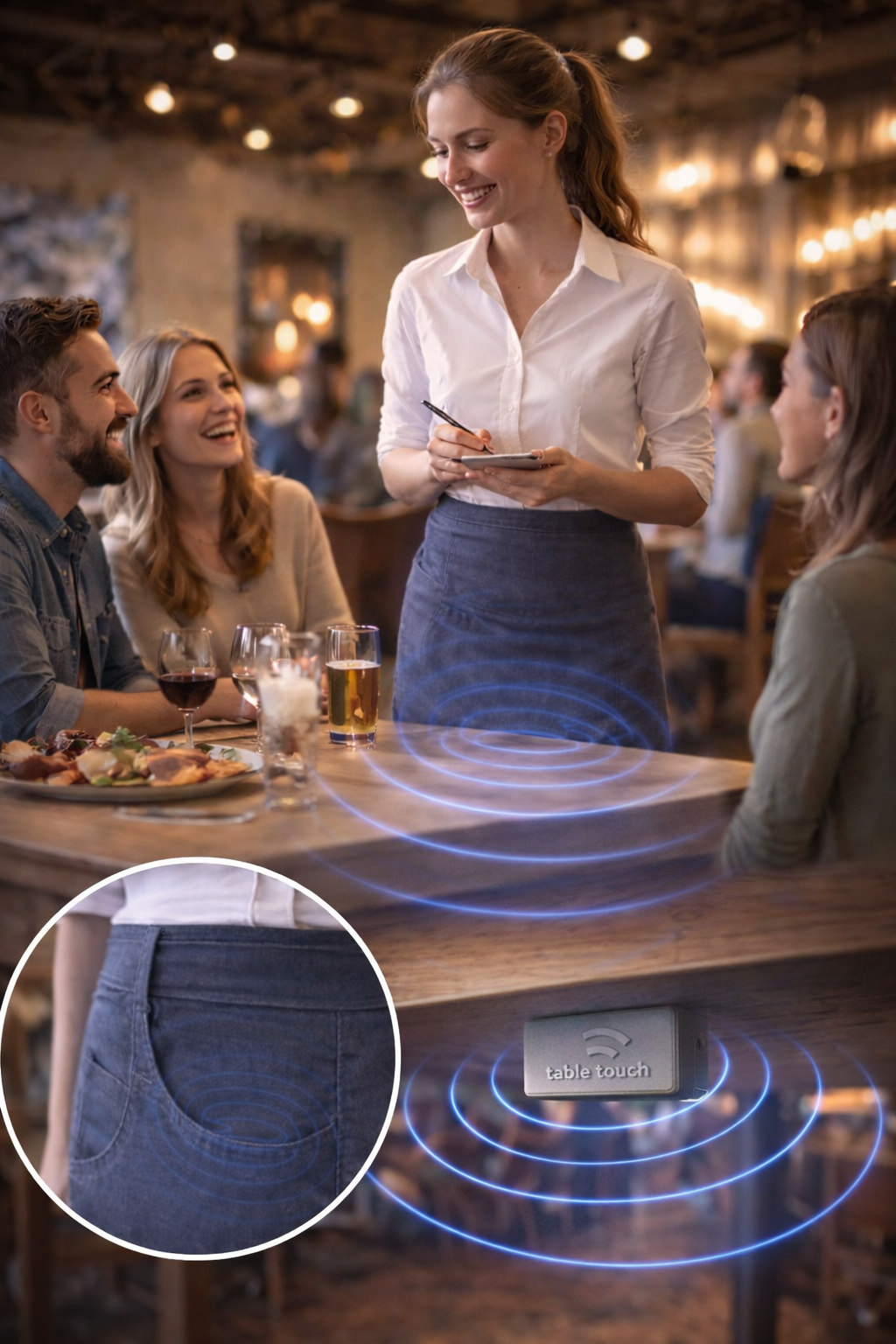
Table Touch works using small devices placed under each table and carried by servers in their pocket or apron.
When a server approaches a table, the system automatically detects the interaction and records the visit.
Each visit is tied to a specific table and a specific employee, creating a detailed timeline of service throughout the shift.
Because this happens automatically — without taps, scans, or manual input — the data reflects how service actually unfolded, not what someone remembers afterward.
Why Outcome-Based Evaluation Falls Short
When performance is judged primarily on results, important details are missed.
Sales don’t show:
How long a table went without attention
Whether guests had to wait to place an order
If check-ins happened at the right time
Manager observations don’t capture:
Every table interaction
Every gap in service
Every moment where support was needed
This leads to inconsistent and often unfair evaluations.
What a Clearer Evaluation Looks Like
A stronger server evaluation is based on how service is delivered across the entire shift.
That includes:
Time between visits to each table
Consistency across all assigned tables
Gaps where tables went too long without attention
Moments where support from other staff was needed
This gives a complete picture of performance — not just what happened, but how it happened.
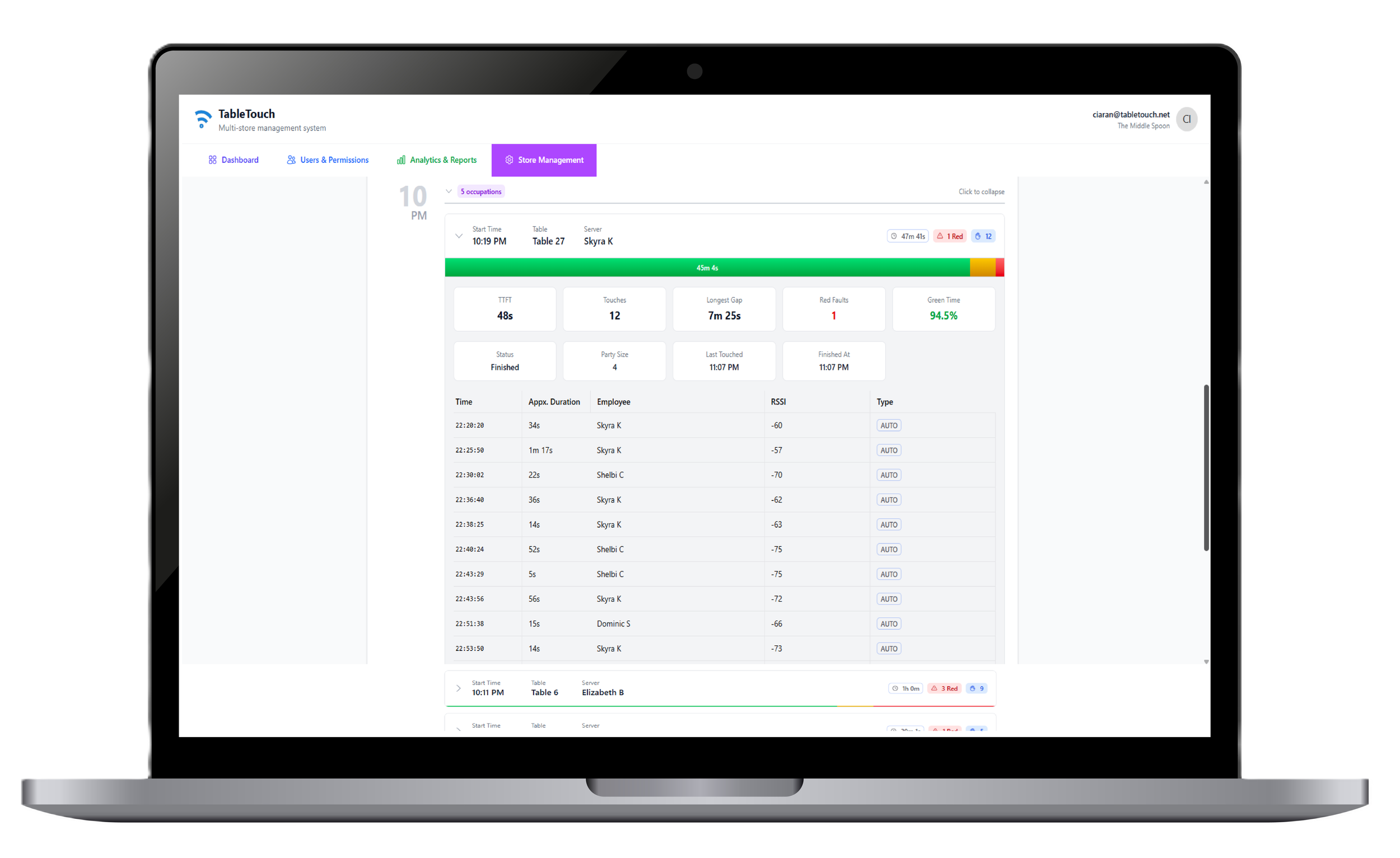
From Evaluation to Coaching
When performance is clearly measured, coaching becomes more effective.
Instead of general feedback like:
“You need to check your tables more”
You can point to specific moments:
“There was an 8-minute gap here — let’s talk about what happened”
That level of clarity makes feedback more actionable and easier for staff to understand and improve on.
Over time, this leads to more consistent service across the entire team.
Make Performance Evaluation Fair and Repeatable
With Table Touch, managers don’t have to rely on memory or instinct after a busy shift.
They can review clear service data, identify patterns, and evaluate performance based on consistent criteria.
This creates:
Fairer evaluations
More effective coaching
Better long-term service habits
Because performance isn’t based on perception — it’s based on what actually happened.
FAQ
How does Table Touch help evaluate server performance?
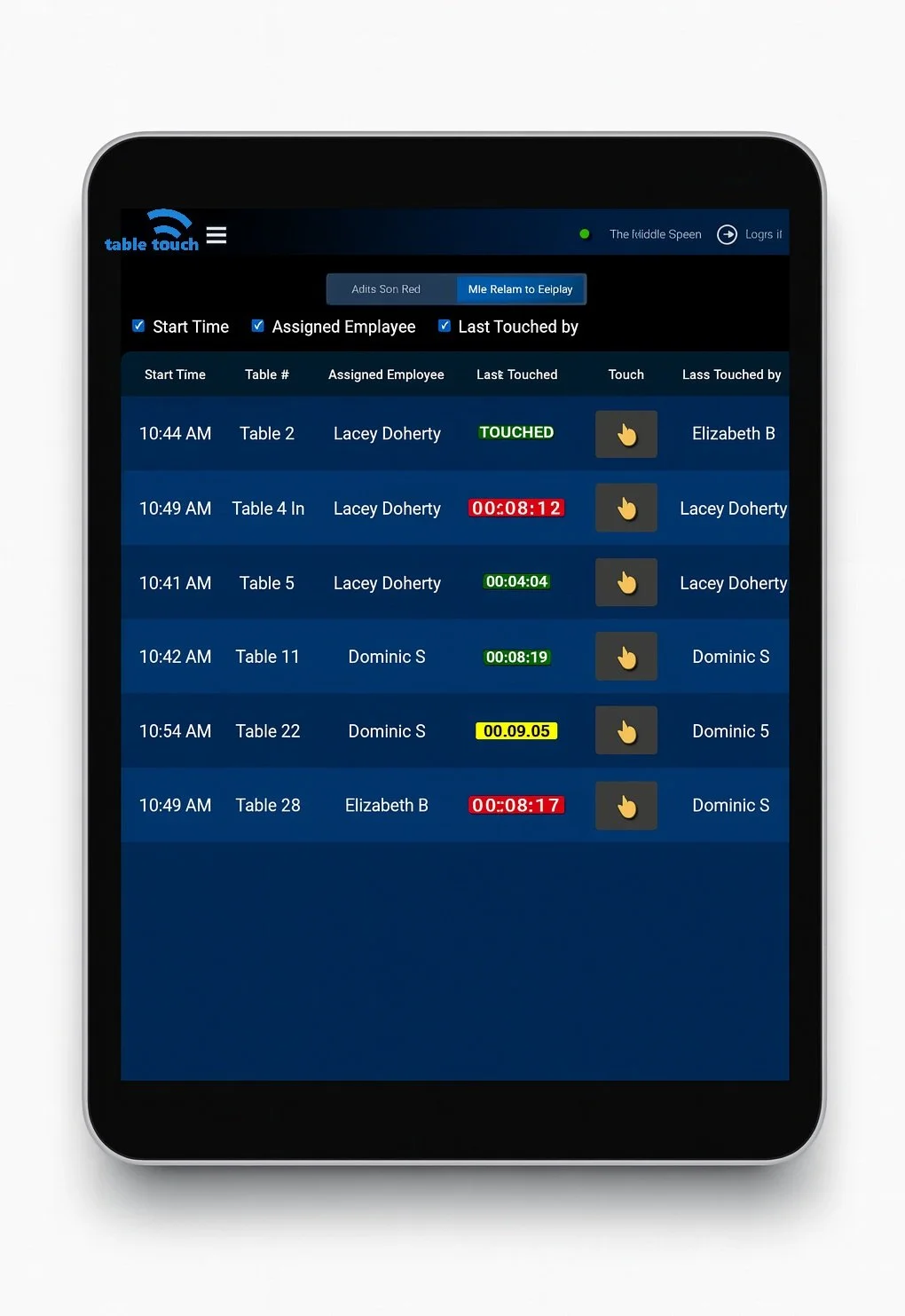
Table Touch tracks when staff visit tables and shows how long it has been since each table was last checked. This creates objective service data based on actual behavior, not assumptions or sales alone.
What makes this different from traditional evaluations?
Traditional evaluations rely on feedback and sales numbers. Table Touch provides clear service data captured throughout the shift, showing service timing, table coverage, and consistency across staff.
Do staff need to interact with the system?
No. There’s nothing for staff to tap or log. Table Touch works automatically using sensors and a device carried in a pocket or apron.
What kind of data does Table Touch record?
Table Touch records every table visit, by who, how long each touch lasted and the time between visits. It records time to first touch, longest gap in service and which staff members are being good teammates visiting tables not assigned to them. This allows restaurants to review guest experience metrics, service quality, and service consistency after each shift.
Can this identify service gaps by individual servers?
Yes. Table Touch shows service timing and table visits by staff member. This makes it clear where service gaps and missed tables are happening and who is covering them.
Will this change how staff work during service?
No. Staff don’t need to change their behaviour. Table Touch runs in the background and detects normal movement around tables.
Is this useful for training and accountability?
Yes. Table Touch provides clear, objective service data that can be used for coaching, training, and evaluating staff performance.
See How Table Touch Would Work in Your Restaurant
Understand exactly how long it’s been since each table was last visited — and where attention is needed next.