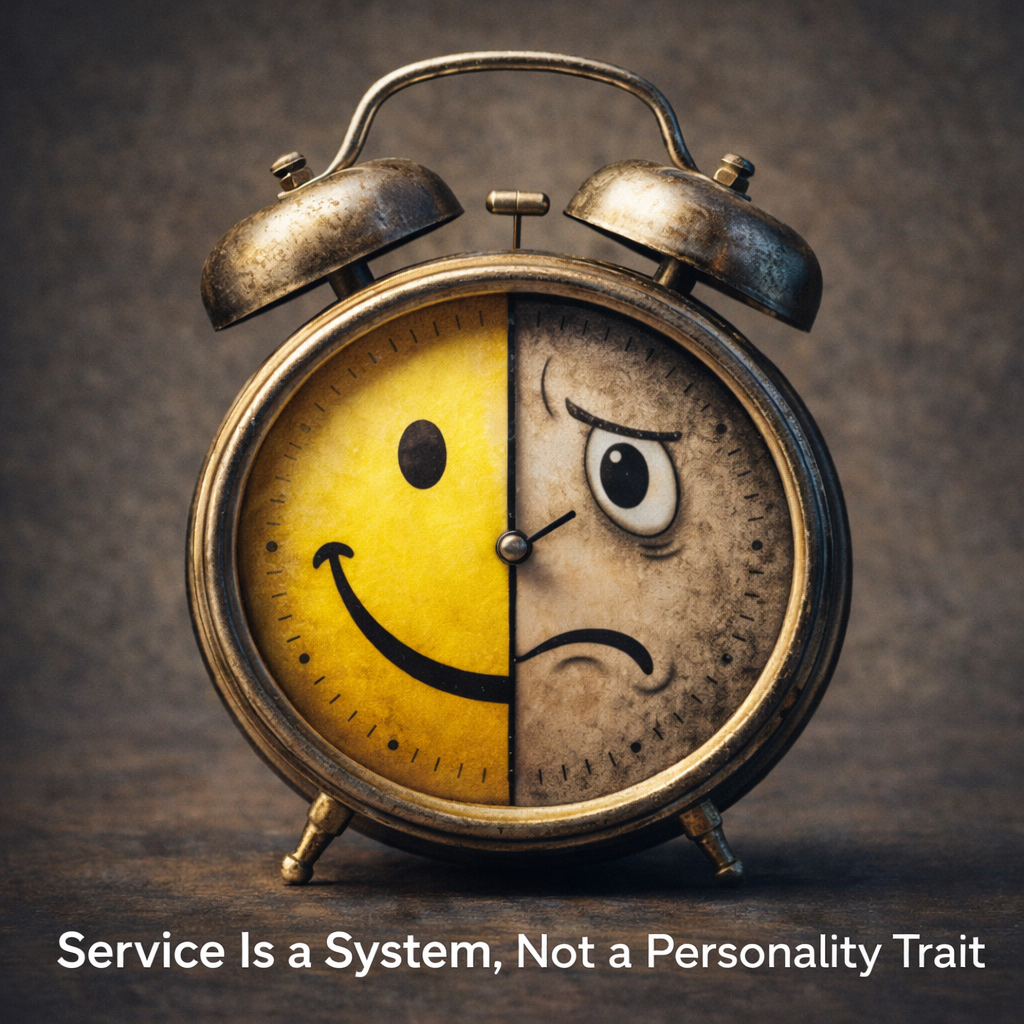
How restaurants make table service visible using timing, patterns, and neutral signals—without relying on instinct or micromanagement.
Read More
How restaurants make table service visible using timing, patterns, and neutral signals—without relying on instinct or micromanagement.
Read MoreWhen service can’t be seen clearly, managers are forced to judge quality by feel instead of facts. This article explains what good service actually looks like when timing, consistency, and patterns become visible — and how that changes coaching on the floor.
Read MoreMost managers don’t actually know when tables are being missed. They infer it from what they see, what they’re told, and what shows up later in reviews. This post breaks down how restaurants try to spot service gaps — and why those methods often fall short.
Read MoreMany service gaps don’t trigger complaints — but they still shape how guests feel, what they order, and whether they return. These quiet moments often go unnoticed by staff and managers because they’re short, situational, and hard to see in real time.
Read MoreService gaps don’t usually come from poor training or lack of care. They happen because managers lack real-time visibility into what’s happening on the floor — even in well-run restaurants.
Read MoreWhy great service still breaks down during busy shifts — and why consistency requires systems, not just great people.
Read More